

The Crucial Role of an Administrative Medical Virtual Assistant in Modern Healthcare
In today’s fast-paced and ever-evolving healthcare environment, administrative medical virtual assistants (VMAs) are becoming an indispensable part of healthcare teams. These professionals provide crucial virtual healthcare services to healthcare providers, ensuring that patient care remains at the forefront of the practice while administrative burdens are reduced. By handling a variety of tasks, from scheduling appointments to managing medical records, virtual assistants allow healthcare professionals to focus on clinical tasks and direct patient care.
In this post, we will explore the growing role of the medical virtual assistant in healthcare practices, the benefits of virtual medical assistant services, and how these professionals can help shape the future of healthcare.
Why Hire a Virtual Medical Assistant?
As healthcare practices evolve, more healthcare providers are turning to virtual assistants for assistance with administrative tasks that traditionally took up significant time and resources. Whether you are managing a virtual medical office or handling remote medical responsibilities, virtual assistant services offer a cost-effective solution to streamline administrative duties.
Hiring a virtual medical assistant allows healthcare teams to focus on patient care while the assistant manages scheduling appointments, organizing patient information, handling billing, and coordinating travel arrangements for medical staff. Virtual medical assistants can also assist in managing electronic health records (EHR) and ensuring compliance with healthcare regulations.
The benefits of a virtual medical assistant extend beyond just reducing overhead costs. They offer virtual assistant services for medical practice that increase operational efficiency, enhance communication between patients and healthcare providers, and ensure that important administrative functions are handled with care.
Patient Care: How Virtual Medical Assistants Support Healthcare Providers
The primary focus of any healthcare practice is patient care, and virtual medical assistants play a crucial role in supporting this priority. A virtual medical assistant helps ensure that patient care remains efficient and effective by taking on administrative tasks such as scheduling appointments, managing patient records, and organizing patient information. By handling these tasks, a virtual assistant allows healthcare professionals to focus more on direct patient care.
Additionally, the virtual assistant can keep track of patient records, ensuring that all information is current and accessible to healthcare professionals when needed. This streamlined approach prioritizes patient care while also enhancing the patient experience by reducing wait times and ensuring appointments are efficiently scheduled and managed.
Virtual Healthcare: Revolutionizing the Medical Field with Remote Assistance
Virtual healthcare is transforming the medical business, and virtual medical assistants are a key part of this transformation. A medical assistant is a remote worker who can provide assistant for healthcare services from anywhere, contributing to a more flexible and cost-effective approach to healthcare. Through virtual medical office setups, virtual assistants manage tasks such as scheduling, billing, and patient data management, all of which are critical for a smooth-running healthcare system.
By providing virtual healthcare, these skilled virtual assistants help streamline operations and improve access to care. This model also allows healthcare professionals to work more efficiently, ensuring that patients receive timely care and attention. Virtual assistants are especially valuable in remote medical settings, where healthcare teams need reliable support to manage daily operations without being physically present in the office.
Need a skilled Virtual Medical Assistant to support your healthcare practice?
TheArcTeam.org offers experienced professionals ready to manage patient records, schedule appointments, handle billing, and provide administrative support remotely. Contact us today to enhance your practice’s efficiency with a trusted Virtual Medical Assistant!
Remote Medical: How Virtual Assistants Facilitate Remote Healthcare Delivery
The rise of remote medical services has increased the need for administrative support in a virtual medical office. Virtual assistants specializing in the healthcare field assist healthcare professionals by handling tasks such as scheduling, managing patient information, and supporting medical professionals in delivering care remotely. These virtual assistants help ensure that everything is organized and that patient care remains a priority, regardless of the physical location.
By supporting the healthcare team remotely, virtual assistants facilitate communication between patients and healthcare providers. Their ability to perform administrative functions remotely ensures that healthcare professionals can focus on clinical tasks, while the administrative side of the practice runs smoothly. Virtual assistants can support the medical business by enhancing overall productivity and efficiency.
Virtual Medical Office: Enhancing Efficiency in Remote Healthcare Practices
A virtual medical office enables healthcare practices to run smoothly while prioritizing patient care. By hiring a virtual medical assistant, healthcare professionals can focus on clinical tasks, while the assistant provides comprehensive support with administrative tasks like managing schedules, organizing patient records, and handling communications. A virtual medical office allows healthcare professionals to offer services remotely, without the overhead costs associated with physical office spaces.
The virtual medical assistant plays a key role in maintaining seamless operations within the virtual medical office. Virtual assistants are skilled in managing inboxes, coordinating patient care, and ensuring that appointments are scheduled promptly. They also help healthcare teams by organizing patient records and handling billing, thus contributing to improved workflow and reduced patient wait times.
Benefits of a Virtual Medical Assistant: Streamlining Healthcare Operations
The benefits of a virtual medical assistant are far-reaching, especially in the modern healthcare environment. By providing virtual assistant services, these professionals free up valuable time for healthcare providers to focus on patient care and clinical tasks. Tasks such as scheduling appointments, managing medical records, and billing are efficiently handled, ensuring that healthcare teams can focus on more critical functions.
A virtual medical assistant can keep everything organized and running smoothly, ensuring that patient data is handled securely and that appointments are scheduled promptly. In traditional medical offices, these tasks are often performed manually, but by hiring a virtual assistant, practices can operate more efficiently, even in remote medical settings. The virtual assistant also plays a crucial role in providing assistant for healthcare services, ensuring that healthcare professionals can continue to offer high-quality care without being burdened by administrative tasks.
Administrative Tasks Handled by Medical Virtual Assistants
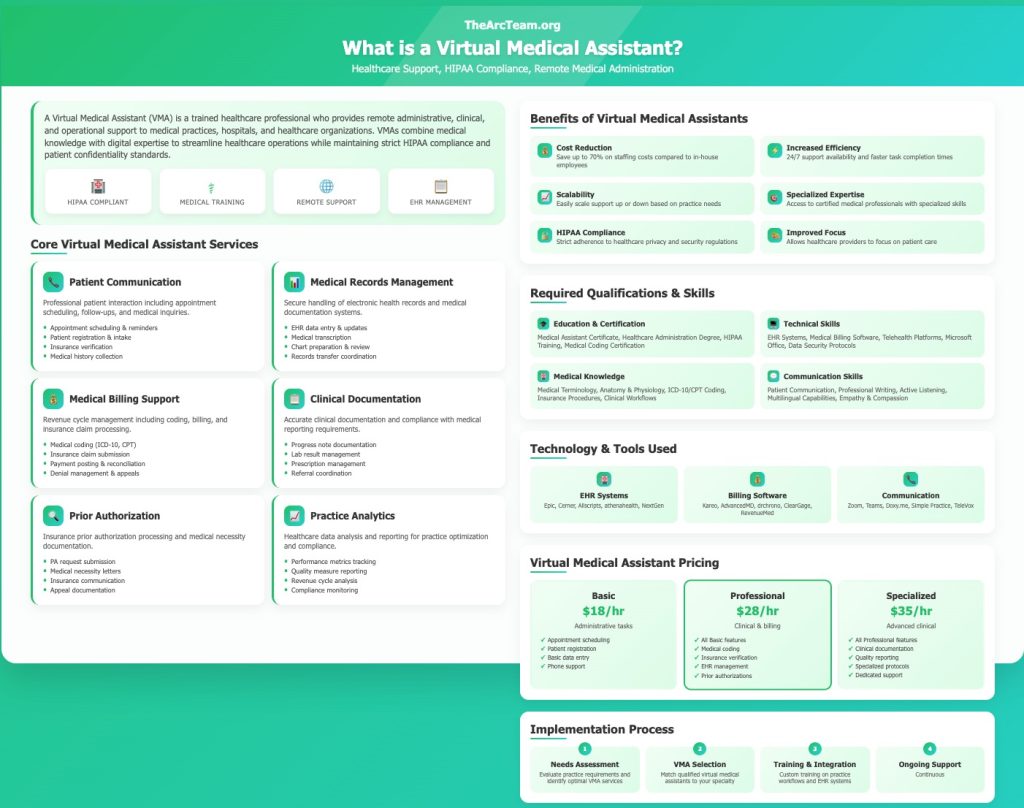
A virtual healthcare assistant performs a broad range of administrative tasks that are essential for the smooth functioning of a medical practice. These tasks typically include:
- Scheduling Appointments: One of the most common tasks a medical VA performs is managing a practice’s calendar. This includes scheduling, rescheduling, and confirming appointments for both new and existing patients. Efficient appointment scheduling ensures the smooth flow of patient visits and reduces wait times.
- Handling Patient Information: Medical administrative assistants are responsible for managing and updating patient records, ensuring that all relevant information is accurately entered into the system. This can include medical and healthcare data such as personal details, treatment histories, and billing information.
- Medical Billing: Another important role of the virtual medical administrative assistant is assisting with medical billing tasks. This includes coding medical services, submitting claims to insurance companies, and following up on unpaid claims.
- Managing Communication: Communication is key in any medical practice, and a virtual assistant plays a vital role in facilitating communication between patients and healthcare providers. Whether it’s answering patient calls, responding to emails, or handling inbox management, the assistant ensures that all correspondence is handled in a timely and professional manner.
- Coordinating Travel: For medical professionals who travel for conferences, patient consultations, or other work-related activities, the virtual assistant coordinates all travel arrangements, including booking flights, accommodations, and rental cars.
These administrative tasks are just the tip of the iceberg when it comes to the duties of a virtual healthcare assistant. Their ability to handle a wide range of services allows the medical team to focus on their primary responsibility: patient care.
Best Virtual Assistant Services for Medical Practice
When you hire a virtual medical assistant, it’s important to choose a professional who can handle the unique challenges of the healthcare industry. The best virtual assistant services for medical practice involve assistants who are not only proficient in administrative tasks but also understand the intricacies of the medical field. These assistants are skilled in medical software and patient data management, ensuring that all sensitive information is maintained securely and in compliance with healthcare regulations.
In addition to their administrative capabilities, a virtual assistant should be knowledgeable in medical terminology and clinical tasks, enabling them to assist effectively with medical transcription, patient care coordination, and even telehealth services. Their experience in the healthcare delivery process will help ensure that every aspect of your practice’s administrative tasks runs smoothly.
The Benefits of Virtual Medical Assistant Services
Virtual medical assistant services offer numerous benefits to healthcare practices looking to streamline their operations. These benefits include:
- Improved Patient Experience: By handling administrative tasks and providing patient care coordination, virtual assistants ensure that patients experience less waiting time and more efficient service. This enhances overall patient care and increases patient satisfaction.
- Cost-Effective Healthcare Delivery: Hiring a virtual medical assistant allows healthcare practices to cut costs by eliminating the need for full-time in-office staff. This is especially important for small practices or those operating in rural areas where resources may be limited.
- Increased Operational Efficiency: With the help of a virtual assistant, medical practices can optimize their workflows. From scheduling to billing to patient information management, all these tasks are handled remotely, enabling the medical team to focus more on their clinical duties.
- Flexibility and Remote Healthcare Access: The ability to work remotely opens up new opportunities for healthcare practices to serve their patients effectively. A virtual assistant for healthcare can work from anywhere, providing a seamless experience for both patients and staff.
- Improved Communication: A virtual assistant is trained to manage communication between patients and healthcare providers, ensuring that no messages or appointments are missed. Their communication tools are vital in maintaining a clear line of communication, especially in telehealth environments.
The Future of Healthcare and Virtual Medical Assistants
The future of healthcare is evolving rapidly with advances in virtual health and telehealth services. As healthcare systems become more digital, the need for virtual medical assistants will continue to grow. The ability to provide remote healthcare services and manage patient care virtually is becoming increasingly important as patients seek more flexible and accessible options.
The healthcare industry is embracing virtual medical assistants for their cost-saving benefits, the ability to improve patient experience, and their ability to scale with the needs of a modern healthcare system. From managing clinical tasks to assisting with patient care coordination, virtual medical administrative assistants are poised to play a key role in shaping the future of healthcare.
How Virtual Assistants Help Your Healthcare Practice Thrive
By providing comprehensive assistant services, a virtual medical assistant helps healthcare practices operate efficiently while focusing on what truly matters: patient care. From administrative duties to managing patient records, these assistants can be integral to improving the quality of care your practice provides. Whether you need help scheduling appointments, handling medical billing, or managing patient data, a virtual healthcare assistant ensures that all tasks are handled professionally and efficiently.
The benefits of virtual medical assistants are clear: they reduce overhead costs, improve patient experience, and provide valuable support to healthcare providers. By outsourcing essential administrative tasks to a skilled medical VA, you can enhance your practice’s operations and stay focused on delivering the best possible care to your patients.
Contact thearcteam.org today to explore how virtual medical assistants can help streamline your practice’s operations and improve patient care!
FAQs about What is a Virtual Medical Assistant: Your Partner in Healthcare
What Do Virtual Medical Assistants Do?
A Virtual Medical Assistant (VMA) provides essential administrative tasks and support for healthcare providers and healthcare teams in a remote medical setting. The VMA often helps manage patient information, including medical records and patient data, ensuring they are up to date and accurate. Some of their responsibilities include scheduling appointments, managing electronic health records, and billing for medical services. They may also assist with medical transcription, patient care coordination, and the management of patient records, contributing to the overall quality of care.
By working remotely, a virtual medical assistant helps streamline the healthcare practice operations, offering virtual healthcare services that improve patient experience. The healthcare virtual assistant can help healthcare organizations by providing virtual medical assistant services that free up time for healthcare professionals to focus on more critical tasks related to patient care.
What is eMR in Virtual Assistant?
eMR stands for electronic medical records, which are digital versions of medical records for patients that can be managed and accessed remotely. In the context of a virtual assistant, particularly a healthcare virtual assistant, managing electronic health records is a key responsibility. Virtual assistants in the medical field use medical software to manage and update eMR systems, ensuring that patient information is accurate, confidential, and accessible to healthcare providers. By doing so, they contribute to the healthcare system’s efficiency, allowing healthcare professionals to focus more on patient care and less on administrative tasks.
The virtual assistant is skilled in using medical software to organize patient medical records, billing, and other administrative duties involved in maintaining a virtual medical office. This role is especially critical in a telehealth environment, where healthcare organizations rely on remote healthcare solutions to deliver care to patients efficiently.
What Does a Virtual Assistant Get Paid?
The salary of a virtual medical assistant can vary depending on factors such as the healthcare setting, the virtual assistant’s experience, and the specific services offered. For example, a virtual assistant for healthcare can expect competitive compensation for tasks such as medical billing, managing patient records, and supporting telehealth services. On average, virtual medical assistants earn between $15 to $35 per hour, with higher rates for specialized tasks or more experienced medical administrative assistants.
The salary for virtual assistant services for medical practice can also be affected by the level of responsibility, such as working directly with healthcare professionals or handling sensitive patient information. The growing demand for virtual healthcare assistant services and the transition to remote healthcare environments may further increase the earning potential for these professionals, especially in the healthcare industry.
What Qualifies You as a Virtual Assistant?
To qualify as a virtual assistant, especially in the healthcare space, you need a combination of skills and experience. Key qualifications include a strong understanding of medical administrative duties such as managing patient records, scheduling appointments, billing, and maintaining sensitive patient information. Experience with medical software and the ability to work with electronic medical records (eMR) is essential. Additionally, strong communication skills and the ability to manage confidential information are crucial for success in this role.
Hiring a VMA often requires familiarity with communication tools and patient care coordination, as well as knowledge of healthcare industry regulations. By demonstrating proficiency in these areas, you can qualify to become a healthcare virtual assistant or virtual healthcare assistant, offering comprehensive support to medical practices and improving patient care in remote healthcare environments.

