

What Do Secretaries Do? A Comprehensive Guide to Their Role and Responsibilities

Secretaries are essential members of any organization, providing crucial support to ensure smooth operations in offices, government agencies, hospitals, and a variety of industries. Often the first point of contact, secretaries perform a wide range of administrative tasks that help businesses and organizations run efficiently. From scheduling appointments to preparing reports, secretaries play an indispensable role in keeping everything organized.
In this blog post, we’ll explore what secretaries do, the key skills required for success, and the responsibilities of a secretary across different industries. We’ll also discuss the job outlook, salary information, and the path one takes to become a secretary. Explore the duties of secretary and administrative assistants. Learn what do secretaries do, skills, and the evolving role of a secretary job and assistant.
Key Skills Required for a Secretary
To be successful in the role of a secretary, it’s crucial to possess a variety of key skills. These skills are essential for performing daily administrative tasks and managing responsibilities effectively. Some of the most important skills needed include:
- Organizational skills: Secretaries need to organize information, manage calendars, and track schedules.
- Communication skills: Since secretaries are often the first point of contact in an office, they must have strong verbal and written communication abilities.
- Computer skills: Proficiency in office software like Microsoft Word, Excel, and PowerPoint is essential. Many secretaries and administrative assistants also use tools like videoconferencing software to manage meetings.
- Time management: Secretaries often juggle multiple tasks, so being able to manage time effectively is critical.
- Attention to detail: Secretaries handle sensitive information and must ensure that all documents are accurate and complete.
Secretary Job: What Does the Role Entail?
The secretary job involves a wide range of administrative duties. These duties can vary depending on the industry, but generally, secretaries are responsible for tasks such as:
- Managing schedules: Secretaries are typically tasked with scheduling appointments, meetings, and travel arrangements for executives or office managers.
- Handling communications: This includes answering phone calls, responding to emails, and drafting memos.
- Administrative support: Secretaries assist with administrative tasks like filing documents, managing databases, and maintaining office supplies.
- Clerical work: They are responsible for routine clerical tasks, such as data entry, organizing files, and preparing documents.
- Meeting preparation: Secretaries may be tasked with preparing meeting minutes, taking notes during meetings, and ensuring that everything runs smoothly during office events.
Responsibilities of a Secretary: A Broad Range of Tasks
The responsibilities of a secretary can be quite diverse depending on the office environment. They are tasked with supporting not only the executives but also the entire office or department. These responsibilities can include:
- Arranging meetings and events: Secretaries arrange meetings, manage calendars, and ensure all participants are informed.
- Handling office correspondence: This includes managing phone calls, emails, and other communication channels.
- Providing administrative assistance: Secretaries are often asked to assist with various administrative duties that keep the office organized, such as preparing reports, organizing documents, and setting up meetings.
- Managing office equipment: Secretaries may be responsible for maintaining office equipment, ensuring supplies are stocked, and troubleshooting minor issues.
Job Outlook: A Growing Field
The job outlook for secretaries and administrative assistants is generally positive. According to the Occupational Outlook Handbook, the demand for secretaries is expected to remain stable, with steady job openings in both the public and private sectors. The job outlook can vary depending on the industry, with sectors like healthcare, law, and technology seeing a steady demand for administrative support staff.
However, as secretaries increasingly take on additional responsibilities, roles such as executive assistants and office managers may become more common. Secretaries and administrative assistants typically enjoy a range of administrative positions, which means there are numerous opportunities for career path advancement.
Looking to streamline your office operations and improve efficiency?
Hire a skilled Secretary or Administrative Assistant from TheArcTeam.org today! Our professionals are ready to provide expert administrative support, manage tasks, and ensure your business runs smoothly. Contact us now to find the perfect fit for your needs!
Required to Become a Secretary: Education and Training
To become a secretary, most positions require a high school diploma, although secretarial training courses or formal training can provide a competitive advantage. Secretaries may also pursue certification programs, such as the Certified Administrative Professional (CAP), to enhance their skills and knowledge. These certifications often involve gaining proficiency in office software, clerical tasks, and organizational procedures.
Additionally, secretaries typically learn through on-the-job training. In some industries, secretaries may need to learn industry-specific terminology or practices. For example, medical secretaries often learn medical terminology and must understand how to manage patient records and other healthcare-related tasks. Legal secretaries might need to familiarize themselves with legal documents and court procedures.
Duties and Responsibilities of Secretaries in Different Sectors
While secretaries in different sectors may have unique duties, they all share common responsibilities. Here’s a look at the specific duties and responsibilities secretaries might have in different industries:
- Medical Secretaries: These professionals often manage medical records, schedule patient appointments, and handle communications between healthcare providers and patients.
- Legal Secretaries: Legal secretaries are responsible for drafting legal documents, filing court papers, and scheduling meetings between attorneys and clients.
- Executive Secretaries: Often referred to as executive assistants, these individuals assist top executives with high-level administrative tasks such as calendar management, travel arrangements, and meeting preparation.
- Office Manager Secretaries: These individuals manage day-to-day office operations, oversee clerical staff, and ensure office supplies are stocked and equipment is functioning.
Secretary Is Generally Responsible for Administrative Tasks
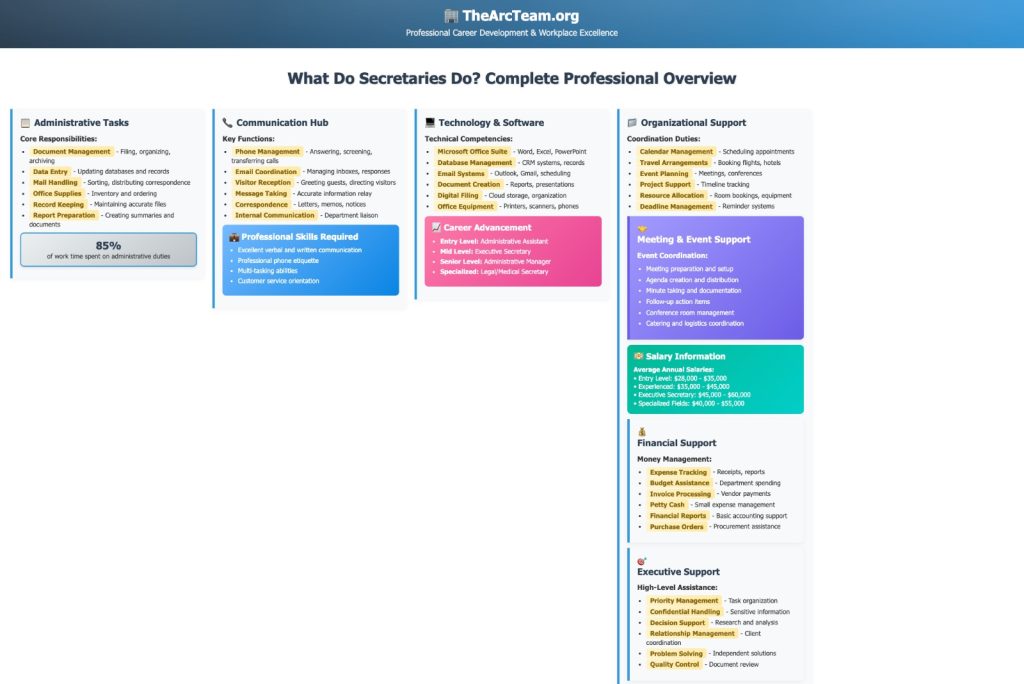
A secretary is generally responsible for a variety of administrative tasks that contribute to the smooth running of an office. These tasks can include organizing files, managing email communication, and ensuring that office managers or other senior personnel have the support they need to perform their roles. Administrative work is a central part of a secretary’s role, and depending on the organization, secretaries may also be required to manage databases, perform data entry, and prepare presentations or other reports.
In the U.S., the job title of a secretary often includes roles such as administrative assistants. These professionals typically assist other staff by managing routine clerical tasks, such as answering phones and organizing schedules. Administrative assistants also use videoconferencing to coordinate meetings, enabling efficient communication across locations. Although secretaries work in various industries, administrative assistants typically learn skills like word processing and how to perform a variety of clerical tasks to support their roles.
Administrative assistants are expected to learn industry-specific terminology and practices within their field. This learning process can take several months as they gain experience in handling clerical tasks and managing new systems. High school graduates interested in assistant roles can begin their careers in temporary placement agencies, which provide valuable hands-on experience. Assistants typically learn their skills on the job, adapting to administrative procedures within nearly every industry to become proficient in their positions and support the smooth running of an organization.
Salary Info: How Much Do Secretaries Earn?
Salary info for secretaries can vary depending on factors like industry, experience, and location. The Occupational Outlook Handbook provides insights into the median annual wage for secretaries and administrative assistants, which generally ranges based on the field. Executive secretaries and office managers, who take on additional responsibilities, typically earn higher salaries than entry-level secretaries.
For example, medical and legal secretaries often earn more than general administrative assistants due to their specialized skills and industry-specific responsibilities. Similarly, positions like executive administrative assistants are usually higher-paying due to their more complex duties and support for senior leadership.
Career Path: Opportunities for Advancement
A career as a secretary can provide ample opportunities for advancement. Many secretaries start in entry-level administrative positions, but as they gain experience and expertise, they may advance to roles such as office manager, executive assistant, or administrative director. Secretaries may also choose to specialize in areas like medical or legal administration, which often come with higher salary and more industry-specific opportunities.
Additionally, those who pursue secretarial training courses and gain certifications in administrative assistance or office management can expand their career path options and take on more complex duties, such as managing teams, leading projects, or handling confidential information.
In conclusion, secretaries perform a variety of administrative duties that keep businesses and organizations running smoothly. The role requires a combination of organizational skills, attention to detail, and the ability to multitask. Whether they are in healthcare, law, or other industries, secretaries are vital to the administrative structure and often serve as the backbone of office operations. With opportunities for career advancement and specialized roles in administrative assistance, the profession offers a wide range of options for those looking to build a long-term, fulfilling career.
FAQs about What do Secretaries do: Secretary and Administrative Assistants
What Are the Duties of a Secretary?
The duties of a secretary encompass a wide range of secretarial and administrative tasks aimed at ensuring that the office runs smoothly. Secretaries are responsible for managing calendars, arranging meetings, and handling travel arrangements. They also assist with drafting memos, preparing meeting minutes, and managing clerical duties such as answering phones, scheduling appointments, and maintaining office equipment. The role of a secretary extends beyond simple administrative tasks, often including managing databases and assisting with administrative support for executives or other office staff. In industry-specific fields like medical and legal secretaries, their administrative duties may involve handling specialized terminology or assisting in preparing reports.
What Skills Do You Need to Be a Secretary?
To succeed as a secretary, several key skills are required. Organizational skills are paramount, as secretaries must handle multiple tasks at once, such as managing calendars, scheduling appointments, and organizing meetings and events. Secretarial training courses can help individuals learn important administrative skills like typing and shorthand, which are still valuable in certain environments. Administrative skills such as proficiency with office software, including database software and videoconferencing tools, are also crucial.
Furthermore, secretaries and administrative assistants typically need strong communication skills, as they are often the point of contact for clients and internal teams. A high school diploma is typically required to get started in entry-level positions, but more advanced positions such as executive secretary or executive assistant may require additional training or experience.
What Is Expected of a Good Secretary?
A good secretary must excel in performing a wide variety of administrative and organizational tasks. Secretaries are expected to carry out administrative duties such as scheduling appointments, handling travel arrangements, managing office supplies, and assisting in the preparation of reports. A secretary should be proficient in managing office operations, from answering phones to taking meeting minutes and organizing files. Their role often involves being the first point of contact for clients and visitors, ensuring that all administrative processes are running efficiently. Secretaries must have strong organizational skills, an ability to multitask, and the capability to manage databases and other office systems effectively. Industry-specific knowledge, such as legal or medical terminology, may be expected, depending on the field.
Is a Secretary a Hard Job?
The secretarial role can be demanding, depending on the administrative duties involved. For those in higher-level positions like executive assistant or personal assistant, the workload can include a high level of responsibility, from managing executive schedules to handling confidential information and making travel arrangements. However, the job is also rewarding, as it plays a critical part in ensuring the office runs smoothly. Secretaries are expected to be highly organized and able to handle a range of clerical tasks, such as managing meeting minutes, scheduling appointments, and assisting in preparing presentations.
The role may be challenging, but with the right skills and training, secretaries can manage these responsibilities with efficiency and effectiveness. With some training and a clear understanding of the duties and responsibilities, secretaries can successfully manage administrative tasks without difficulty. Secretaries might also take on additional roles depending on the organization and its needs.

