

Learn Call Center Abbreviations: A Comprehensive Guide
In the fast-paced world of call centers, the use of abbreviations and acronyms is essential for efficiency and communication. These terms help professionals in the industry quickly convey important concepts, metrics, and technologies that are critical to call center operations. From key performance indicators (KPIs) to essential call center software, understanding these abbreviations is crucial for optimizing processes, improving customer experience, and ensuring customer satisfaction.
This blog post provides an in-depth exploration of call center abbreviations, key customer service acronyms, and how they contribute to the success of modern call centers. We will define some of the most commonly used terms and offer examples of how they are applied in the industry.
Acronyms and Abbreviations in the Call Center Industry
In the call center industry, acronyms and abbreviations are used to simplify communication, increase efficiency, and ensure that everyone is on the same page when discussing operations, metrics, and processes. Some of the most commonly used call center acronyms include FCR for First Call Resolution, AHT for Average Handle Time, and ACD for Automatic Call Distribution. These terms help teams streamline operations and focus on key performance indicators (KPIs) such as call center performance and customer satisfaction. Understanding and utilizing these call center terms is crucial for effective call center management.
First Call Resolution: A Key Metric for Customer Satisfaction
First Call Resolution (FCR) is one of the most critical call center metrics. It refers to the ability to resolve a customer’s issue during the first call, without the need for follow-up calls. FCR directly impacts customer satisfaction and plays a significant role in assessing call center operations. Improving FCR means call centers are addressing customer issues effectively and efficiently, reducing the need for repeat calls and boosting customer loyalty.
Automatic Call Routing: Streamlining Customer Interactions
Automatic call routing is a feature that ensures calls are directed to the most appropriate call center agent. It helps optimize call center operations by minimizing wait times, improving first call resolution, and enhancing the overall customer experience. Call routing can be based on predefined criteria such as customer history, agent expertise, or call priority. Call centers may also integrate CRM systems with call routing for more personalized service and quicker issue resolution.
Average Handle Time: A Critical Call Center Metric
Average Handle Time (AHT) is an essential call center metric that measures the average time a call center agent spends handling a call, from the initial greeting to the completion of after-call work. Reducing AHT is crucial for improving operational efficiency while maintaining high service standards. However, AHT must be balanced with first call resolution, as quick handling should not come at the expense of customer satisfaction.
Customer Relationship Management (CRM) in Call Centers
Customer Relationship Management (CRM) refers to the strategies and technologies that businesses use to manage and analyze customer interactions and data. In a call center, CRM systems are integrated into the call management system to provide call center agents with immediate access to customer information. This allows agents to offer personalized service, improving customer experience and increasing customer satisfaction. Effective CRM ensures that call center agents have the right tools and information to resolve issues efficiently and accurately.
Call Center Solutions: Streamlining Operations and Improving Efficiency
Call center solutions are comprehensive systems that integrate call management software, CRM tools, and analytics to optimize call center operations. These solutions include automatic call distribution (ACD), call monitoring, call routing, and call blending, which help businesses manage high call volumes, enhance first call resolution, and improve customer satisfaction. A well-implemented call center solution ensures that call centers can scale efficiently while delivering exceptional service.
Call Detail Record: Tracking Customer Interactions
A Call Detail Record (CDR) is a log or database that records information about every telephone call made through a call center. These records capture vital data such as call duration, call routing, call center agent, and call results. CDRs are essential for call center managers to track call center performance, analyze call volume, and improve service delivery by identifying trends, assessing agent performance, and optimizing operational efficiency.
Uniform Call Distribution: Managing Call Work Efficiently
Uniform Call Distribution (UCD) is a system used to manage the flow of calls to call center agents in a fair and balanced manner. The uniform call distributor ensures that calls are sent to the next available agent in an even distribution, optimizing call center performance and maintaining fairness in call work. UCD is particularly useful for handling high volumes of calls, ensuring that no agent is overloaded with excessive calls, which can negatively impact service quality.
Call Blending: Optimizing Agent Utilization
Call blending refers to the practice of combining inbound call center and outbound call center activities to maximize call center efficiency. With call blending, call center agents can switch between handling inbound calls and making outbound calls, based on current demand. This practice helps optimize call center resources, ensuring that agents are always engaged and productive, leading to more efficient call center operations.
Common Call Center Terms: Essential for Effective Operations
In call center operations, there are numerous call center terms that help define processes, measure performance, and improve efficiency. Common terms include:
- Call Volume: The total number of calls handled by a call center in a given period.
- Call Work: The activities or tasks that call center agents perform during and after a call, including documenting customer information, updating records, and resolving issues.
- Inbound Call Center: A contact center that primarily handles incoming calls from customers.
- Outbound Call Center: A call center that primarily focuses on making outbound calls, such as sales calls, surveys, or follow-up calls.
These terms are fundamental in understanding the processes that make call center solutions effective and efficient.
Call Center Operations: Key Components for Success
Call center operations refer to the entire set of activities and processes involved in managing customer interactions. This includes everything from call routing, handling inbound calls, outbound calls, and call center agent management. Effective call center operations depend on integrating advanced technologies such as automatic call distributors (ACD), call blending, and CRM systems to improve customer experience and service delivery. Optimizing call center performance through proper call management is crucial for enhancing customer satisfaction and ensuring smooth business operations.
Call Center Solutions: Enhancing Customer Experience and Operational Efficiency
Call center solutions refer to the combination of software, strategies, and processes designed to optimize the management of customer interactions. These solutions often include contact center as a service (CCaaS) platforms, which integrate call center software with cloud-based technologies to enhance call center performance. By implementing call center solutions, businesses can improve customer experience, first call resolution, and call center performance while reducing operational costs and ensuring smoother, more efficient call management.
In conclusion, call center acronyms, key performance indicators, and the use of modern call center solutions are essential for maintaining efficiency and delivering excellent customer service. By understanding these call center terminologies, businesses can optimize their call center operations, improve customer satisfaction, and stay competitive in an increasingly complex market. Whether it’s call routing, call blending, or CRM integration, leveraging the right tools and processes ensures the call center solution fits your needs.
Customer Service Acronyms: A Key Element in Call Center Communication
In the realm of customer service, there are numerous acronyms used to describe important metrics, technologies, and processes that help assess performance. These customer service acronyms are vital in maintaining a high standard of service and ensuring that businesses meet their customer experience goals.
Some examples of customer service acronyms include:
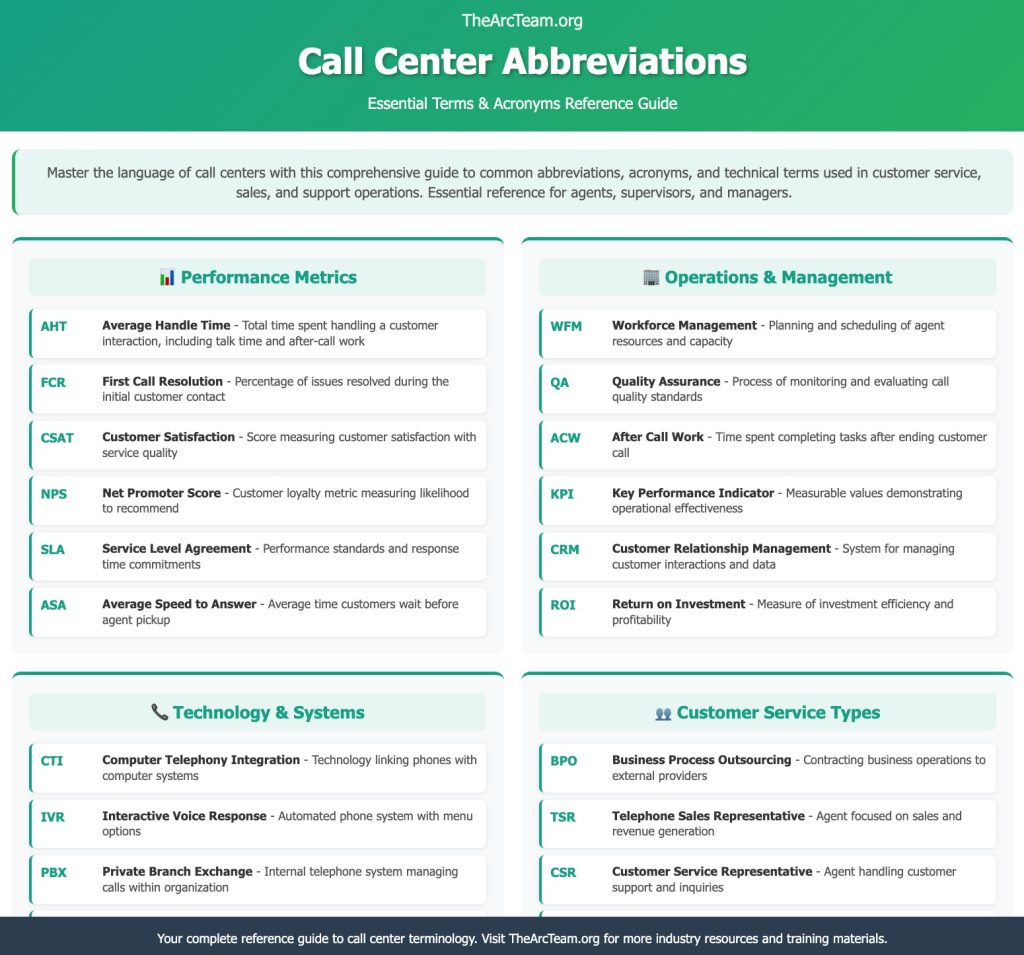
- FCR – First Call Resolution: A key performance metric that measures the percentage of customer issues resolved during the first interaction, often inbound calls.
- AHT – Average Handle Time: This call center metric tracks the average duration a call center agent spends on each call, including talk time and post-call work.
- NPS – Net Promoter Score: A measure of customer satisfaction and loyalty that is often used in customer service to gauge the likelihood of customers recommending the business.
These customer service acronyms play a vital role in tracking and improving the customer experience.
Call Center Acronyms: Essential for Efficient Call Management
Call center acronyms are the shorthand terms used to manage call center operations effectively. These terms often refer to specific call center metrics, technologies, and strategies used to ensure that calls are handled promptly and efficiently. Below are some of the most common call center acronyms:
- ACD – Automatic Call Distributor: A call center solution that automatically distributes incoming calls to the appropriate call center agent based on predefined rules such as availability or skill set.
- IVR – Interactive Voice Response: A system that allows customers to interact with a computer system via voice or keypad inputs, commonly used to direct customers to the right department.
- BPO – Business Process Outsourcing: Outsourcing non-core business functions, including customer service tasks, to external service providers.
These call center terms are essential for effective call management and ensuring the customer satisfaction that is central to call center operations.
Key Performance Indicators (KPIs) and Their Importance in Call Centers
In a call center, key performance indicators (KPIs) are metrics used to evaluate the effectiveness of operations. These KPIs help call center managers measure agent performance, monitor service levels, and ensure that customer needs are met in a timely manner.
Some of the most common KPIs in the call center industry include:
- FCR – First Call Resolution Rate: Measures how often customer service agents resolve customer issues during the first call.
- AHT – Average Handle Time: Indicates how long it takes call center agents to handle a call, including after-call work.
- Call Abandonment Rate: Tracks the percentage of incoming calls that are abandoned by customers before they are answered by an agent.
By regularly reviewing call center metrics like these, businesses can identify areas for improvement and enhance customer service.
Call Center Terms: A Comprehensive Guide
Call center terms are essential vocabulary that every customer service agent and call center manager should be familiar with. These terms include everything from the technologies used in call centers to the processes that govern call management.
Some important call center terms include:
- CTI – Computer Telephony Integration: This technology allows for the integration of call center software with computers, enabling agents to view customer information during calls.
- ACD – Automatic Call Distribution: A system that helps route calls to the next available agent based on predefined rules or agent availability.
- CRM – Customer Relationship Management: A software tool used to track customer interactions, allowing agents to provide personalized service during customer interactions.
These center terms help in making call centers more efficient and ensuring that agents are equipped with the information and tools they need to deliver excellent customer experience.
Popular Call Center Metrics: Measuring Success
Call center metrics are used to measure the performance of call center agents and the overall effectiveness of call center operations. These metrics help businesses assess how well they are meeting customer needs and achieving business objectives.
Common call center metrics include:
- Call Volume: Refers to the number of calls a call center handles over a specific period. It helps in evaluating the efficiency of call center agents and identifying busy periods for better resource management.
- Call Routing: Refers to how calls are distributed to the right agents based on customer data and call requirements. It helps in optimizing call center operations and reducing wait times for customers.
By analyzing these call center metrics, businesses can make data-driven decisions to improve customer satisfaction and overall call center performance.
Automatic Call Distribution: Streamlining Call Center Operations
Automatic Call Distribution (ACD) is an essential component of call center systems, responsible for efficiently managing and routing incoming calls to the most appropriate call center agent. A call center context relies heavily on ACD to ensure calls are assigned to available agents based on predefined criteria such as skillset, priority, or availability. This system automatically delivers each incoming call to the next available agent, significantly reducing wait times and improving call center performance.
For example, in an outbound call center, ACD ensures calls are routed to the next available agent, allowing them to handle a high call volume effectively. Similarly, in inbound call centers, the system ensures that call centers can efficiently manage call work, ensuring customers are quickly connected to the right department.
The Importance of a Comprehensive List of Call Center Acronyms
In the world of call centers, professionals rely on a list of call center acronyms to improve communication and streamline operations. Some common acronyms include CMS (Call Management System), which plays a crucial role in call routing, and FCR (First Call Resolution), a call center metric that measures the ability of an agent to resolve a customer issue during the first call.
A comprehensive list of call center abbreviations is often essential for employees to understand and quickly reference key call center terminologies. This list of call acronyms also helps new employees become familiar with the industry’s lingo and improves overall workflow.
Call Center Infrastructure: Building for Success
The infrastructure to help call centers is crucial for ensuring seamless operations. A call center system includes all the necessary components—hardware, software, and network resources—that allow agents to manage calls, handle customer interactions, and maintain customer satisfaction. Effective call center infrastructure ensures that agents have the tools they need to manage calls efficiently, including the ability to view call detail records, use call management systems, and integrate customer relationship management (CRM) software.
The infrastructure also provides the foundation for call centers to make and receive calls, enabling them to meet customer demands and adjust based on fluctuating call volumes. Call center investment in infrastructure ensures that businesses can manage call center operations effectively while maintaining high service standards.
Call Center Metrics: Measuring Success with Call Routing and ACD
In call centers, call routing and automatic call distribution (ACD) are critical tools for measuring success. These tools help determine important call center metrics like average handle time, call abandonment rate, and first call resolution rate. Call routing ensures that every incoming call is efficiently directed to the next available agent, based on factors like agent skill level and availability.
Additionally, using call management systems (CMS), call centers can analyze call center performance by reviewing call recordings and evaluating call work metrics. These systems allow call center managers to review the duration an initiated call rings, ensuring that calls are answered promptly and customer satisfaction is maintained.
Optimizing Call Center Operations with Automated Systems
In call center operations, using automatic call distribution (ACD) and call center software helps reduce inefficiencies and enhances productivity. ACD systems automatically deliver each incoming call to the next available agent, ensuring a smooth flow of calls throughout the day. This system helps to prioritize high-value or urgent calls, ensuring that important calls are answered quickly, improving first call resolution and customer service.
With call routing integrated into the call center system, calls are distributed in an efficient and automated manner, ensuring that call centers handle call volume effectively. Call centers to assign calls based on agent availability or workload ensures that call work is distributed fairly and that agents remain productive.
Call Center Terminologies: Understanding Key Components
Understanding call center terminologies is essential for effective communication and successful call center operations. For example, terms like call volume and call detail records help call centers track the number of calls received, their duration, and the outcomes. Call center agents need to be familiar with common call center terms such as call blending (which allows agents to handle both inbound and outbound calls) and call center metrics like average handle time.
Familiarity with call center terminologies ensures that agents, managers, and other staff members are on the same page, leading to better decision-making, smoother call center operations, and improved customer satisfaction.
In summary, understanding call center terminology and having efficient call center solutions like automatic call distribution and call routing systems in place ensures that call centers operate smoothly, handle high call volumes, and ultimately deliver superior customer service. With the right infrastructure, metrics, and ACD systems, businesses can optimize their call center operations for better performance and increased customer satisfaction.
The Role of Call Center Software in Improving Customer Experience
Call center software plays a critical role in managing customer interactions, improving call management, and ensuring customer satisfaction. These software tools enable call centers to track customer interactions, monitor call quality, and implement call routing strategies to improve service efficiency.
Some important features of call center software include:
- Call Management: Helps call center agents handle inbound and outbound calls efficiently, ensuring a smooth customer experience.
- CRM Integration: Integrates with customer relationship management (CRM) tools to provide customer service agents with immediate access to customer data, improving the quality of customer interactions.
With the right call center solution and center software, businesses can ensure that every call is handled professionally, improving the customer experience and increasing customer satisfaction.
The Importance of Call Center Terminologies
Understanding call center terminologies is essential for anyone working in the industry. These terms help call center agents, managers, and supervisors communicate efficiently and streamline daily operations. Whether it’s call detail records, call blending, or call center performance metrics, each term serves to improve the overall call center environment and support customer service excellence.
In conclusion, call center abbreviations and acronyms are vital in ensuring smooth communication and operational efficiency within contact centers. By understanding key call center terms, metrics, and the tools that drive success, businesses can enhance their call center performance, improve customer experience, and provide better service to their customers.
FAQs about Call Center Abbreviations and Acronyms Glossary
What are the BPO Abbreviations?
In the Business Process Outsourcing (BPO) industry, various abbreviations are commonly used to represent key concepts, metrics, and technologies. Some of the most frequently used BPO abbreviations include:
- BPO: Business Process Outsourcing
- CCI: Call Center Industry
- TSR: Technical Support Representative
- CX: Customer Experience
- CRM: Customer Relationship Management
- ACD: Automatic Call Distributor
- AHT: Average Handle Time
- FCR: First Call Resolution
- KPI: Key Performance Indicator
These abbreviations help professionals in the contact center industry effectively communicate complex ideas and operations. Understanding call center metrics like FCR and AHT is crucial for monitoring customer satisfaction and improving customer service.
What is a CCI in a Call Center?
In a call center, CCI stands for Call Center Industry. It refers to the collective sector of businesses and organizations that provide call center services. The call center industry focuses on managing customer interactions and customer service functions through inbound and outbound calls. The CCI includes various call center solutions, from automatic call distributors (ACD) to cloud contact center software, all designed to optimize call management and improve customer experience.
What does TSR Stand for in a Call Center?
TSR stands for Technical Support Representative in a call center. A TSR is a customer service representative responsible for providing technical assistance to customers. They handle inquiries related to product issues, troubleshooting, and solutions for technical problems. TSRs are critical in ensuring first call resolution (FCR), a key call center metric that measures the success of resolving customer issues on the first call. TSRs typically handle incoming calls in a contact center, utilizing call center software and CRM systems to assist customers effectively.
What does CX Mean in a Call Center?
In the context of a call center, CX stands for Customer Experience. Customer experience refers to the overall interaction a customer has with a business or service, encompassing every touchpoint, including inbound calls, outbound calls, emails, and live chat. CX is an essential aspect of call center operations, as it directly impacts customer satisfaction and loyalty. Call centers aim to improve CX by utilizing call center software to streamline call routing, reduce call abandonment rates, and ensure first call resolution. A great customer experience often leads to increased customer retention and positive customer interactions.

