
Career Success with Credential, Enrollment, and Pathway to Administrative Excellence
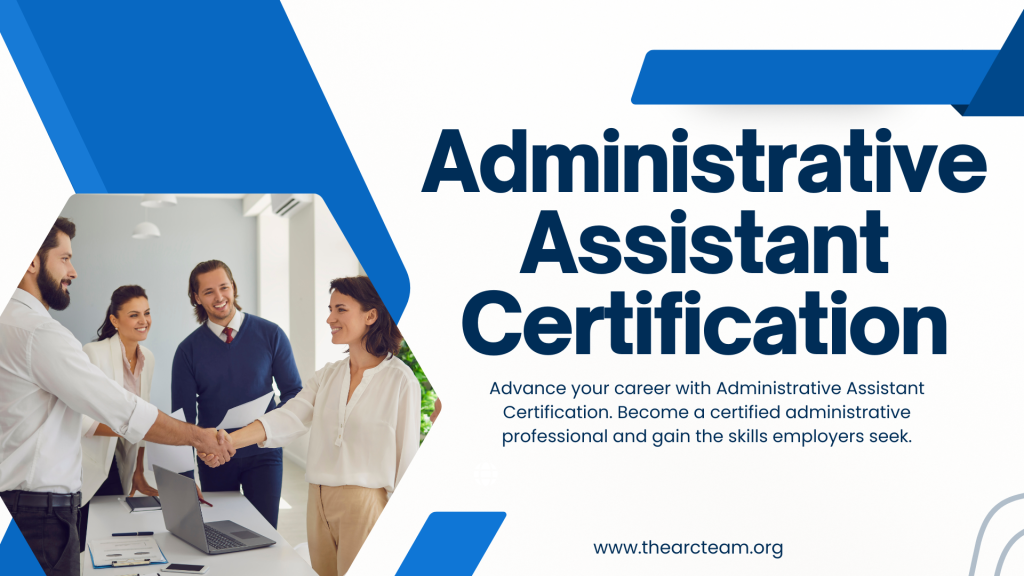
In today’s fast-paced business world, the role of administrative professionals, such as secretaries and administrative assistants, has evolved significantly. These professionals are crucial to the smooth functioning of organizations, providing essential administrative support across different sectors. As the demand for skilled administrative workers grows, the credential, enrollment, and pathway to becoming a highly qualified administrative professional have become increasingly important. Advance your career with Administrative Assistant Certification. Become a certified administrative professional and gain the skills employers seek.
In this blog post, we will explore how obtaining the right credential can boost your career, the importance of enrollment in specialized certification programs, and the pathway to becoming an industry-recognized administrative expert. We’ll also highlight the key technical skills and knowledge you need to succeed in administrative support occupations and give yourself a competitive edge in the evolving business environment.
Credential: The Key to Career Advancement in Administrative Roles
A credential serves as a proof of expertise and competence in a specific field. For administrative professionals, obtaining a recognized credential can be the differentiator between standing out in the competitive job market and blending in. Industry-recognized certifications demonstrate that you possess the technical skills and knowledge needed to handle the duties for office and administrative professionals effectively. Whether it’s through obtaining a certified administrative assistant designation or becoming a certified administrative professional (CAP), earning a credential proves to employers that you have the skills required to hit the ground running in their organization.
Having the right credential shows you have a solid understanding of the fundamental responsibilities required in administrative support occupations, such as using Microsoft Office, organizing files, and handling office procedures efficiently. These industry-recognized certifications are more than just a piece of paper—they validate your ability to manage office tasks, coordinate schedules, and communicate effectively, all of which are key skills for any administrative role.
By earning a credential, you give yourself the opportunity to progress in your career. The credential proves you have the knowledge needed to handle administrative tasks confidently and competently, enhancing your career prospects in various industries.
Enrollment: Taking the First Step Towards Administrative Excellence
Enrollment in a reputable certificate program or industry-recognized certification pathway is a crucial first step for anyone looking to advance in the field of administrative support. Whether you’re just starting your career or looking to take your current role to the next level, enrollment in a certification program equips you with the technical skills and knowledge that employers highly value.
Programs designed for administrative assistants and other office professionals typically cover fundamental topics such as Microsoft Word, Excel, communication, and organizational skills. These programs are tailored to provide you with both the hands-on experience and the theoretical knowledge needed to perform administrative duties effectively. By enrolling in these courses, you prepare to take on more challenging tasks, such as analyzing data, managing office procedures, and supporting executive teams with strategic initiatives.
In addition to learning how to organize files and manage schedules, administrative assistant certification also focuses on business culture and office dynamics. As businesses evolve, so does the need for administrative professionals who can adapt to changing environments, handle diverse duties, and understand the roles that administrative assistants play in various industries.
Pathway: The Journey to Becoming a Skilled Administrative Professional
The pathway to a successful career in administrative roles involves much more than just enrollment in a certification program. It’s a journey that requires both technical skills and the knowledge required to manage a wide range of administrative duties. From handling paperwork and scheduling meetings to providing executive support, the pathway involves gaining a comprehensive understanding of the various tasks that administrative assistants undertake to help organizations run efficiently.
The first step in this pathway is obtaining the right credential. Once you complete the enrollment in a certificate program, you begin to gain the technical skills required to perform essential tasks such as organizing files, writing reports, and preparing financial statements. Furthermore, learning how to use Microsoft Office tools and specialized software is critical, as it enables you to manage a variety of administrative tasks efficiently.
After gaining the knowledge and skills, administrative assistants can move on to more advanced roles like executive assistant or office manager. In many cases, advanced training and certifications like the Certified Administrative Professional (CAP) or Certified Professional Secretary (CPS) provide a clear pathway for growth and offer new job opportunities in various sectors, such as healthcare, finance, and education.
Additionally, the pathway involves ongoing professional development. By staying updated with industry trends and business tools, administrative professionals can continue to grow their skills and take on more responsibility within their organization. Employers are increasingly seeking professionals who can manage complex office operations and coordinate tasks across various departments, making the pathway to advancement even more attainable for those who pursue continual education and certification.
Administrative Support Occupations Listed: A Growing Field with Numerous Opportunities
Administrative support occupations continue to be among the most crucial roles in any business. These positions, which include secretaries and administrative assistants, are essential for office operations and help organizations run smoothly. Administrative support occupations listed by industry professionals reflect a broad scope of responsibilities, from scheduling appointments and managing records to providing executive support and handling complex office procedures.
As businesses grow and the business culture evolves, the demand for office and administrative professionals increases. This means that those with the right skills, including proficiency in tools like Microsoft Word and Excel, have more opportunities for career growth. Whether you are starting your career or seeking to advance, the jobs available in administrative support span across different industries, offering career stability and advancement potential.
Knowledge Required of an Administrative Professional: Key Competencies for Success
To succeed in administrative support occupations, individuals must possess specific knowledge required of an administrative professional. This includes understanding key office software tools like Microsoft Word, Excel, and Outlook, as well as having a solid grasp of organizational tasks, scheduling, and managing communication in a professional setting.
The knowledge needed to earn a competitive edge as an administrative assistant includes time management, multi-tasking, and the ability to coordinate meetings, manage documents, and handle confidential information. Additionally, many administrative professionals are required to understand company-specific procedures and have strong communication skills. Those who have formal training and gain knowledge needed to earn certifications like the Certified Administrative Professional (CAP) will position themselves as highly qualified professionals in the field.
Earning the Industry-Recognized Credential: Boosting Your Career Prospects
Earning the industry-recognized credential such as the Certified Administrative Professional (CAP) or Certified Professional Secretary (CPS) can significantly boost your career prospects. These certifications demonstrate that you have the knowledge, skills, and experience required to perform at a high level within the administrative field. In addition to proving competency, these credentials show that you are committed to your professional development and have a competitive edge over non-certified peers.
For example, certification programs often include essential topics such as records management, communication skills, business procedures, and project management. These areas of knowledge are vital for excelling in office support roles. Certification proves that you understand the duties and responsibilities required in administrative work, including handling confidential data, coordinating tasks, and managing communication across teams.
Recent Median Annual Wage: Financial Benefits of Becoming an Administrative Professional
The recent median annual wage for administrative assistants and office professionals is competitive, especially for those with relevant work experience and industry-recognized certifications. According to the Bureau of Labor Statistics, administrative professionals who specialize in managing records, organizing meetings, or supporting executives can expect salaries that are competitive with other administrative roles.
The recent median annual wage is higher for those with specialized skills such as data management, accounting, or project coordination. The median wage is influenced by the industry, location, and whether the administrative assistant holds certifications that demonstrate advanced knowledge in their field. As business culture evolves, employers increasingly seek candidates who can manage more complex duties and responsibilities, which often translates into higher salaries.
Employers Want Candidates Who Can Hit the Ground Running
In today’s competitive job market, employers want candidates who can hit the ground running without requiring extensive training. Those who have certification and relevant work experience are viewed as valuable assets because they have already gained the skills and knowledge required to thrive in an administrative role.
Certification, like that of a Certified Administrative Professional (CAP), proves to employers that you understand the duties, responsibilities, and knowledge required to be effective in administrative roles. By demonstrating that you can handle typical duties such as data entry, scheduling, and communications, you will not only impress hiring managers but also show that you are ready to perform administrative tasks efficiently and with minimal oversight.
Typical Duties for Office and Administrative Professionals
The typical duties for office and administrative professionals include a broad range of responsibilities. Administrative assistants are often tasked with managing calendars, scheduling appointments, and handling office paperwork. In addition, they may be responsible for maintaining records, organizing meetings, and supporting senior staff with their administrative needs.
As business culture evolves, the scope of administrative duties also expands. Many administrative professionals are now asked to take on project management tasks, assist with financial record-keeping, and support various departments across the organization. These typical duties require a high level of organization, communication, and problem-solving skills. To meet the demands of these evolving roles, professionals must gain knowledge in office software, like Microsoft Word, and technical skills related to managing office procedures.
Looking to enhance your team’s efficiency and organization?
Hire top-tier Administrative Professionals from TheArcTeam.org today! Our experts are ready to provide seamless support, handle your tasks with precision, and help your business thrive. Contact us now to find the perfect professional for your needs!
Knowledge Needed to Earn a Valuable Industry Credential
The knowledge needed to earn this valuable industry credential includes a combination of formal training, hands-on experience, and a deep understanding of office operations. Professionals who pursue certifications like the Certified Administrative Professional (CAP) or Certified Professional Secretary (CPS) are expected to demonstrate skills and knowledge in areas like Microsoft Excel, office procedures, and records management. These certifications prepare candidates to serve as trusted administrative professionals in a variety of industries, including healthcare, finance, and education.
Earning these credentials will not only help you gain the technical skills and knowledge needed to excel in administrative support occupations, but it will also give you a competitive edge in the job market, proving that you are capable of performing the duties required in modern office environments.
Job Opportunities in Different Industries: The Growing Need for Administrative Professionals
Job opportunities for administrative assistants and office professionals are abundant across different industries. Employers in a variety of sectors, from healthcare and finance to education and government, require skilled administrative staff to manage the essential tasks that keep their operations running smoothly. The demand for professionals with industry-recognized certification continues to grow as more businesses look for qualified individuals to take on more complex office duties.
By gaining the technical skills and knowledge needed through formal training and certification, administrative professionals can access a wider range of job opportunities, whether in traditional office settings or in virtual assistant roles.
By pursuing certification, gaining relevant work experience, and staying updated with the latest industry trends, you can elevate your career as an administrative assistant and increase your earning potential in the growing field of administrative support occupations.
The Competitive Edge: Gaining Skills, Knowledge, and Experience
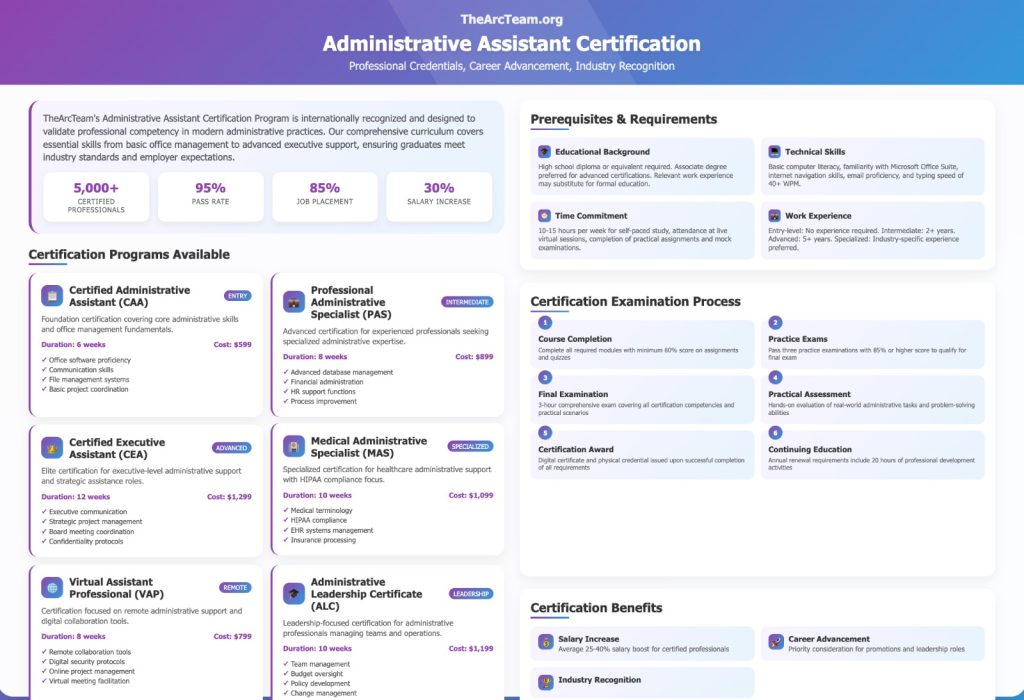
While certification is a critical component of the pathway to becoming a top-tier administrative professional, it’s equally important to gain the technical skills and knowledge needed to perform effectively in various industries. Many programs offer flexibility, such as online courses, allowing you to customize your learning experience and focus on areas that are most relevant to your career goals. Whether you are interested in scheduling appointments, managing records, or preparing financial reports, administrative assistant certification equips you with the tools necessary to succeed.
In addition to technical skills, employers also seek soft skills such as time management, attention to detail, and strong communication abilities. Having a well-rounded skill set and an understanding of the duties for office and administrative professionals will give you a competitive edge and ensure you can hit the ground running in any organization.
Industry-Specific Certifications: Unlocking Career Opportunities
As industries evolve, so too do the roles within them. For administrative assistants, gaining industry-recognized certifications in fields such as healthcare, finance, and technology can provide access to specialized job opportunities. For instance, administrative assistants working in medical settings may pursue certifications such as the Certified Medical Administrative Assistant (CMAA) to help manage patient records and scheduling appointments.
These certifications are particularly valuable for those looking to work in high-demand sectors, where specialized knowledge is crucial. For example, in healthcare, administrative assistants play a crucial role in supporting patient care by managing complex medical records, handling billing, and assisting healthcare professionals with administrative duties. Earning the administrative assistant certificate or credential specific to this industry makes candidates more attractive to employers in the healthcare field.
By following the right pathway—starting with enrollment in a certification program, earning your credential, and gaining technical skills—you can position yourself as a highly qualified administrative assistant ready to succeed in any industry. The credential you earn will not only serve as proof of your skills but also give you the knowledge to handle increasingly complex administrative tasks. Whether you’re just starting or looking to advance your career, gaining the competitive edge through continued professional development is key to success in the dynamic field of administrative support.
FAQs about Administrative Professional Certification | Online Certificate
What Is the Highest Pay for an Administrative Assistant?
The highest pay for an administrative assistant depends on several factors, including work experience, industry, and location. Administrative assistants with a certified administrative professional (CAP) designation or administrative assistant certification often have an edge when negotiating salaries. According to the Bureau of Labor Statistics (BLS), the median annual wage for administrative assistants in office and administrative support occupations is competitive, but those with specialized skills like Microsoft Excel, Outlook, and Microsoft Word can command higher wages.
For entry-level roles, salaries may start at the median annual wage range, but those with advanced skills in records management, meeting planning, and time management often see their annual wage increase significantly. Additionally, those who obtain an administrative assistant certificate or have passed the certification exam by organizations like the National Career Certification Board (NCCB) can see a competitive edge in their earning potential.
Specialized assistants, such as those with skills and knowledge in financial statements, spreadsheets, and other technical skills, can expect higher pay. For example, an administrative assistant to the CEO or senior executive assistant might have an annual wage far above the median, reflecting the more demanding responsibilities and expertise required for such positions.
Why Are Administrative Assistant Jobs Declining?
There are several reasons why administrative assistant jobs may be in decline, according to the Bureau of Labor Statistics (BLS). One key factor is the automation of many administrative tasks through software like Microsoft Excel, Outlook, and various online tools. Many companies are opting for automated systems to handle tasks such as data entry, scheduling appointments, and even some communication tasks that used to require an administrative assistant.
The rise of remote working and virtual assistant roles has also contributed to the decline of traditional in-office administrative assistant positions. These virtual assistants can work from home, offering more flexibility to employers and reducing the need for physical office staff.
Moreover, some companies have streamlined their office procedures, consolidating the tasks typically handled by administrative assistants into more specialized roles. For instance, meeting planning, office coordination, and clerical tasks might now be handled by other departments or individuals. As the business environment shifts towards streamlined workflows, the demand for traditional administrative assistants may continue to decline.
What Is the Future for Administrative Assistants?
The future for administrative assistants is evolving with changing business needs, but administrative assistant jobs are far from disappearing. The demand for administrative support remains strong, especially in businesses that require strong organizational skills, communication skills, and proficiency with tools like Microsoft Office and spreadsheets. Administrative assistants who obtain certified administrative assistant status or gain other certifications will have a competitive edge in the job market, with employers often seeking professionals who can hit the ground running.
There is also an increasing demand for virtual administrative assistants who can work remotely, supporting organizations with virtual assistant services in managing office procedures, scheduling, and communication. These assistants are expected to have high-level skills and knowledge in online tools, meeting coordination, and records management. The ability to work remotely is an attractive option for many administrative professionals, providing flexibility and a better work-life balance.
Moreover, as the modern office continues to evolve, administrative assistants will likely take on more strategic responsibilities. They may be involved in supporting executive leadership, project management, and other functions that require a deeper understanding of the business culture and industry. Certified administrative professionals with advanced technical skills, including knowledge of financial statements, and those with the ability to analyze and manage complex tasks, will find themselves in demand in the future.
What Is an Admin Assistant’s Salary?
An admin assistant’s salary can vary greatly depending on several factors such as location, industry, skills, and certifications. The median annual wage for administrative assistants typically falls within a broad range, but those with additional certification, such as the certified administrative professional credential or a certificate program, can earn significantly higher salaries. In industries where specialized knowledge is required, such as medical office management, finance, or technology, salaries tend to be higher than in general office administration roles.
The Bureau of Labor Statistics (BLS) states that the median annual wage for administrative assistants in office and administrative support occupations is competitive, but professionals who have gained work experience, especially those with a certification exam under their belt, often earn more. In addition, administrative assistants who can effectively manage multiple tasks and assist across various departments often have opportunities to earn a higher annual wage.
For example, a certified administrative professional (CAP) who supports high-level executives or handles financial duties can expect a higher salary. Many administrative assistants can also pursue online courses and enrollment in certification programs that will provide the skills needed to meet evolving industry demands, giving them a competitive edge in salary negotiations.

