

What is BPO? A Comprehensive Guide to Business Process Outsourcing
Business Process Outsourcing (BPO) is a strategic practice where businesses delegate specific functions or processes to an external service provider. This outsourcing of business processes helps organizations reduce costs, enhance efficiency, and focus on their core business operations. Over the years, BPO has evolved into a global industry offering a wide variety of services ranging from customer support to technical support and HR outsourcing. In this blog post, we will explore the key aspects of BPO, including what is BPO, its types, benefits, and how to choose the right BPO partner.
Types of BPO
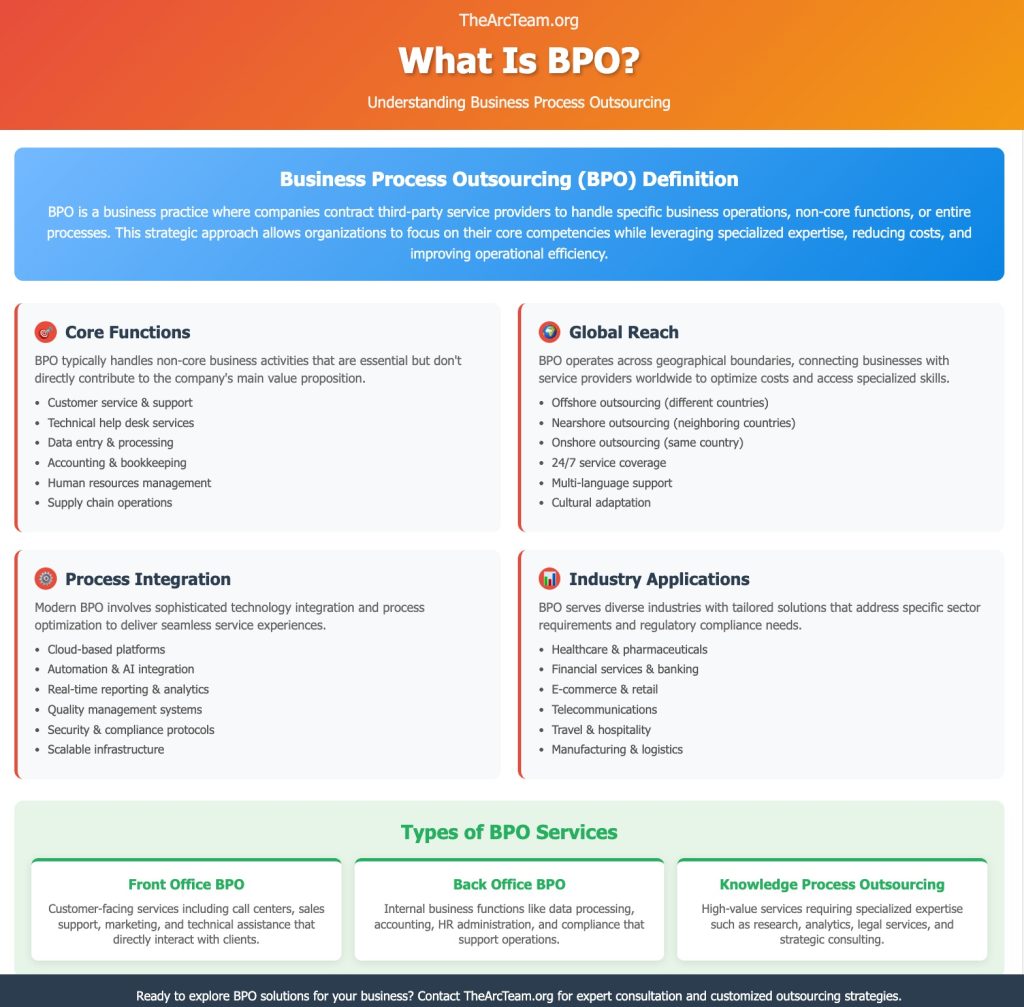
BPO can be classified into different categories based on the nature of the outsourced processes. The main types of BPO include:
1. Front-Office BPO
Front-office BPO focuses on customer-facing services, such as customer support and sales. This category includes call centers, help desks, and sales support, where employees directly interact with customers. A BPO call center is an example of front-office outsourcing, providing businesses with customer experience management, inbound and outbound calls, lead generation, and technical support.
2. Back-Office BPO
Back-office BPO involves functions that support the primary operations of a business but do not directly interact with customers. These include services like data entry, payroll processing, accounting, and IT support. Back-office BPO is crucial for handling internal business operations efficiently, allowing businesses to focus on growth and core business functions.
3. Knowledge Process Outsourcing (KPO)
KPO involves outsourcing tasks that require advanced knowledge and expertise in specialized fields, such as research, analytics, and financial services. KPO services are typically more complex and involve processes like market research, data analysis, and engineering services.
4. Human Resources Outsourcing (HR Outsourcing)
HR outsourcing is an essential part of BPO, where companies delegate functions like recruitment, payroll management, employee benefits administration, and performance management to external vendors. HR outsourcing allows organizations to focus on their core business while ensuring compliance and improving operational efficiency.
Benefits of BPO
Outsourcing business processes to a BPO provider offers several advantages, including cost savings, operational efficiency, and access to specialized expertise. Here are some of the benefits of BPO:
1. Cost Reduction
One of the primary reasons businesses turn to BPO is to reduce operational costs. By outsourcing certain functions, companies can save on expenses related to hiring, training, office space, and infrastructure. For example, offshore BPO allows businesses to access skilled professionals in regions with lower labor costs, resulting in significant savings.
2. Focus on Core Business Functions
Outsourcing non-core tasks allows businesses to focus on what they do best. By entrusting certain business functions like customer support or data entry to an external BPO partner, companies can direct their resources and attention towards their core business objectives, enhancing productivity and growth.
3. Access to Expertise
BPO providers are specialists in their respective fields. Whether it’s customer service, finance, or IT support, BPO vendors bring in-depth knowledge and expertise to the table. This allows businesses to benefit from the latest technologies, process automation, and best practices without having to invest heavily in training and development.
4. Scalability and Flexibility
BPO offers flexibility and scalability, enabling businesses to adjust their operations based on changing needs. Whether you need additional customer service representatives during peak seasons or extra resources for a new project, a BPO provider can quickly scale up or down to meet your requirements.
BPO Call Center
A BPO call center is one of the most common types of outsourcing services. It involves external call center agents handling inbound and outbound calls on behalf of a business. These calls can range from answering customer queries to generating leads and conducting surveys. A call center CRM integrated with BPO software can help track customer interactions, improving the customer experience and enhancing customer satisfaction.
The use of call center technology such as call routing, call monitoring, and real-time feedback ensures that every call is handled efficiently. This can have a significant impact on improving customer support, reducing response times, and boosting overall productivity.
BPO Provider and BPO Partner
A BPO provider is an external company that offers business process outsourcing services. They handle specific business functions like customer service, IT support, or back-office operations. A BPO partner is a strategic business ally that works closely with a company to ensure smooth operations, business continuity, and cost-effectiveness. Finding the right BPO partner is essential for businesses looking to ensure high-quality service delivery and alignment with their business objectives.
When partnering with a BPO, companies can choose from offshore outsourcing, nearshore outsourcing, or onshore outsourcing based on their needs and budget. Each model offers unique advantages, such as cost savings, proximity, or direct collaboration with local teams.
Ready to optimize your business operations and reduce costs?
Explore the power of Business Process Outsourcing (BPO) with TheArcTeam.org! Our expert team can handle your non-core functions, allowing you to focus on what matters most—growing your business. Get in touch today to find the perfect BPO solution for your needs and take your business to the next level!
Challenges of BPO
While BPO offers numerous benefits, it also presents certain challenges that businesses must be aware of. Some common challenges of BPO include:
1. Communication Barriers
If a BPO vendor is located in a different region or country, language barriers, and time zone differences can lead to miscommunication or delays. These issues can affect the customer experience and may hinder the smooth execution of tasks.
2. Quality Control
Ensuring the quality of outsourced services can be a challenge. It’s important to establish clear BPO contracts, performance metrics, and quality management processes to monitor agent performance and maintain high standards.
3. Data Security
Outsourcing certain business functions like customer data management or IT support may raise concerns about data security and confidentiality. Companies must ensure that their BPO partner follows strict data protection protocols and complies with industry regulations.
BPO Work: How Outsourcing Transforms Business Operations
BPO work involves contracting specific business processes to an external service provider. This allows companies to streamline operations and focus on their core business functions. For instance, outsourcing accounting, payroll, or customer service can significantly reduce overhead costs and improve operational efficiency.
With business process outsourcing, businesses can access process automation tools and the latest technologies to enhance productivity. From robotic process automation to CRM integration, BPO companies help businesses stay competitive by utilizing advanced tools that improve service delivery and reduce manual effort.
BPO Companies: A Diverse Range of Services to Streamline Your Business
BPO companies provide a wide range of services that help businesses manage specific business operations more efficiently. By outsourcing internal business functions, companies can focus on their core business activities, thereby improving performance and reducing costs. Outsourcing providers offer modern BPO services such as inbound BPO, outbound BPO, and research process outsourcing, giving businesses access to specialized skills and technologies.
Choosing the right BPO company involves selecting a provider that can handle your unique needs, whether you’re outsourcing customer service, business process management, or other critical functions. Many outsourcing companies provide flexible solutions, ranging from local outsourcing to global outsourcing, making it easier for businesses to scale and operate in multiple markets.
Choosing a BPO: Finding the Right Partner to Fit Your Needs
When choosing a BPO, businesses must carefully evaluate various factors to ensure a successful outsourcing arrangement. BPO involves contracting external providers to handle tasks such as customer support, IT services, or HR management. The key to success is selecting the right BPO partner that aligns with your business goals and can effectively manage business processes.
Look for outsourcing providers that offer a proven track record in delivering high-quality services and have the expertise in the specific business operations you wish to outsource. Consider factors such as the costs of BPO, outsourcing market size, and the type of services business you operate in. Ensure that the BPO provider is capable of handling both standard business models and more complex operations that might require specialized knowledge.
Benefits of Outsourcing: How BPO Can Transform Your Business
Outsourcing offers a wide array of advantages, and the benefits of outsourcing are clear when implemented correctly. By engaging in business process outsourcing, companies can achieve significant cost reductions while maintaining or improving service quality. For example, global outsourcing allows businesses to tap into cost-effective markets, while local outsourcing ensures closer proximity to customers for more personalized service.
BPO enables businesses to reduce overhead costs and improve business intelligence by outsourcing non-core activities to experts. Business process outsourcing offers increased flexibility, scalability, and the ability to focus on core business functions. By leveraging outsourcing options like traditional BPO or modern BPO services, businesses can stay competitive and meet evolving market demands.
Outsourcing Business Processes: Why It’s Essential for Growth
Outsourcing business processes allows organizations to be more agile and flexible in meeting market demands. By outsourcing business processes such as HR, customer support, or IT services, companies can better allocate their resources, invest in growth, and focus on core business functions.
Choosing to outsource business processes enables organizations to remain competitive and responsive to changing market dynamics. Whether it’s expanding operations or scaling down to meet demand fluctuations, BPO offers businesses the flexibility and scalability they need to thrive in today’s fast-paced environment.
Finding the Right BPO Partner
Choosing the right BPO partner is critical to the success of any outsourcing arrangement. It’s important to carefully evaluate potential BPO companies based on factors such as:
- Expertise and Experience: Ensure that the BPO vendor has the necessary experience and skills to meet your business needs.
- Technology and Tools: Evaluate the BPO service provider’s call center software, automation tools, and overall technology infrastructure to ensure they align with your operational requirements.
- Cultural Fit: A successful BPO partnership often depends on a strong cultural fit between your company and the BPO partner. It’s essential to ensure that your BPO provider understands your business objectives and customer expectations.
Partnering with the right BPO partner will help you maximize the benefits of outsourcing and ensure that your business remains efficient and customer-centric.
In conclusion, BPO is a powerful business strategy that can help companies reduce costs, improve efficiency, and focus on their core business. By understanding the different types of BPO, benefits of outsourcing, and challenges of BPO, businesses can make informed decisions and partner with the right BPO provider to achieve long-term success. Whether you choose offshore BPO, nearshore outsourcing, or onshore outsourcing, leveraging BPO services allows businesses to remain agile and competitive in an ever-changing market.
FAQs about What Is BPO: Business Process Outsourcing & How To Outsource
What is BPO in simple words?
BPO, or Business Process Outsourcing, refers to the practice of hiring an external service provider to handle specific business tasks or functions that are typically performed in-house. This allows a company to focus on its core business while outsourcing activities like customer support, human resources, supply chain management, and back-office operations. BPO can be categorized into offshore outsourcing, nearshore outsourcing, and onshore outsourcing, depending on the geographical location of the BPO provider. By outsourcing business operations, companies can reduce costs and improve efficiency through specialized expertise and technology.
Is BPO a debt collector?
No, BPO is not synonymous with debt collection. While a BPO provider can handle customer support or accounts receivable tasks, debt collection is a specific business function within the BPO industry that focuses on recovering unpaid debts. BPO includes a wide range of services, such as front-office functions like customer experience management and back-office services like human resources and process automation. While debt collection can be part of a BPO service, it is just one aspect of the larger outsourcing services that BPO companies provide.
What is BPO vs call center?
BPO vs call center: A call center is a specific type of BPO service that handles customer support via phone, email, or chat. It primarily deals with inbound and outbound calls related to customer inquiries, sales, and technical support. On the other hand, BPO is a broader term that encompasses a wide range of business functions, including call center operations, but also back-office functions like human resources outsourcing, legal process outsourcing, and financial services. While all call centers are part of the BPO market, not all BPO services involve call centers.
What is an example of a BPO job?
An example of a BPO job could be a customer service representative working in a call center that provides customer support for a company’s products or services. These agents handle inbound calls, assist with order processing, and provide customer information. Other BPO jobs may include roles in HR outsourcing, technical support, data entry, accounting, and process automation. These roles help businesses reduce their operational costs and focus on their core business functions, allowing them to achieve better business outcomes.

