
Administrative Assistant News: Trends, Insights, and the Future of the Role
The role of the administrative assistant has always been essential in ensuring smooth operations within any business or organization. From managing schedules and organizing meetings to overseeing complex administrative tasks, these professionals provide critical support to the leadership team, enabling the smooth functioning of day-to-day activities. As the workplace continues to evolve, so does the role of the administrative assistant, particularly with the rise of technology, remote work, and shifting business needs.
In this blog post, we’ll dive deep into the latest administrative assistant news, discuss emerging trends in the field, explore how technology is reshaping the role, and provide insight into the evolving duties and expectations of administrative assistants today.
The Changing Landscape of Administrative Assistant Roles
Historically, administrative assistants were tasked with duties such as data entry, calendar management, and answering phones. However, as businesses have become more global and complex, the expectations for administrative assistants have expanded. Today, administrative assistants are not just gatekeepers of the office—they are increasingly integral to business strategy and success.
Modern administrative assistants are now expected to manage complex scheduling, support executives, handle communications across various channels, and often assist with project management. Additionally, many administrative assistants are now taking on responsibilities such as event planning, managing social media accounts, and overseeing budgeting and financial tasks. With these added duties, administrative assistants have become key players in ensuring organizational efficiency and effectiveness.
The Impact of Technology on Administrative Assistants
One of the most significant shifts in the administrative assistant news landscape is the influence of technology. As organizations continue to adopt digital tools, administrative assistants are leveraging software and applications to streamline their tasks and enhance productivity. Whether it’s scheduling appointments using tools like Google Calendar, managing documents through cloud-based storage like Google Drive or Dropbox, or organizing workflows with project management software like Trello or Asana, technology has become an indispensable part of the administrative function.
For example, the advent of artificial intelligence (AI) has allowed administrative assistants to automate routine tasks like data entry and email management. AI tools can help administrative assistants analyze vast amounts of data, schedule appointments based on availability, and even assist with basic customer service inquiries through chatbots. This technology is enabling administrative professionals to take on more strategic roles and less repetitive work.
Remote work tools have also transformed the role of administrative assistants, especially since the pandemic. As businesses pivoted to remote and hybrid work models, virtual assistants became a vital resource for executives and teams. Using platforms like Zoom, Slack, and Microsoft Teams, administrative assistants now provide virtual support, helping companies navigate this new way of working. They manage virtual meetings, assist with remote document management, and even help onboard new hires in virtual environments.
Looking for a skilled Administrative Assistant to support your team?
TheArcTeam.org provides highly trained professionals ready to manage your administrative tasks, optimize workflows, and keep your office running smoothly. Get in touch today and let us help you streamline your operations with expert administrative support!
Emerging Trends in Administrative Assistant News
- Rise of Virtual and Remote Administrative Assistants
In recent years, the demand for virtual assistants has surged. More businesses are recognizing the value of remote administrative assistant services to support a more flexible and cost-effective working environment. Whether it’s a startup or a global corporation, companies are opting to hire virtual administrative assistants who work remotely.
This trend is particularly prevalent in industries such as technology, healthcare, and marketing, where administrative assistants handle tasks such as scheduling, managing inboxes, or overseeing financial tasks remotely. Virtual assistants often operate from home offices, providing administrative support without the need for physical presence in the office.
- Administrative Assistants as Strategic Partners
Another emerging trend is the growing recognition of administrative assistants as strategic partners within organizations. Traditionally viewed as support staff, administrative assistants are increasingly contributing to high-level decision-making processes and business operations. Their responsibilities are expanding beyond basic office tasks into strategic project management, assisting with business development, and contributing to corporate communications.
As the role evolves, administrative assistants are also expected to have a deeper understanding of the industry they work in. For example, medical administrative assistants now need to understand healthcare regulations and patient care protocols to manage medical records and assist with scheduling appointments in medical practices effectively.
- Focus on Soft Skills and Emotional Intelligence
While technical skills such as proficiency in office software and project management tools are important, there’s a growing emphasis on soft skills for administrative assistants. Communication, empathy, and problem-solving abilities are becoming increasingly valuable in today’s workforce. Administrative assistants are often the first point of contact for clients, patients, or customers, so their interpersonal skills and emotional intelligence are essential in ensuring smooth relationships and customer satisfaction.
In fact, many employers are seeking administrative assistants who are highly skilled in relationship management, as these professionals help create positive working environments for employees and clients alike. For example, executive assistants may serve as liaisons between executives and staff, customers, or external stakeholders, requiring them to handle sensitive matters with professionalism and discretion.
- Hybrid Roles for Administrative Professionals
Another trend that has emerged in the administrative assistant news space is the growth of hybrid roles that combine administrative duties with other responsibilities. Administrative assistants are increasingly being asked to take on duties that were once the responsibility of other departments, such as marketing, customer service, or human resources.
In particular, virtual assistants in small businesses or startups are often required to wear multiple hats, handling marketing tasks like social media management, customer service through email or phone, and even bookkeeping. These hybrid roles enable administrative assistants to expand their skill sets while making themselves indispensable to the business’s overall operations.
The Future of Administrative Assistants
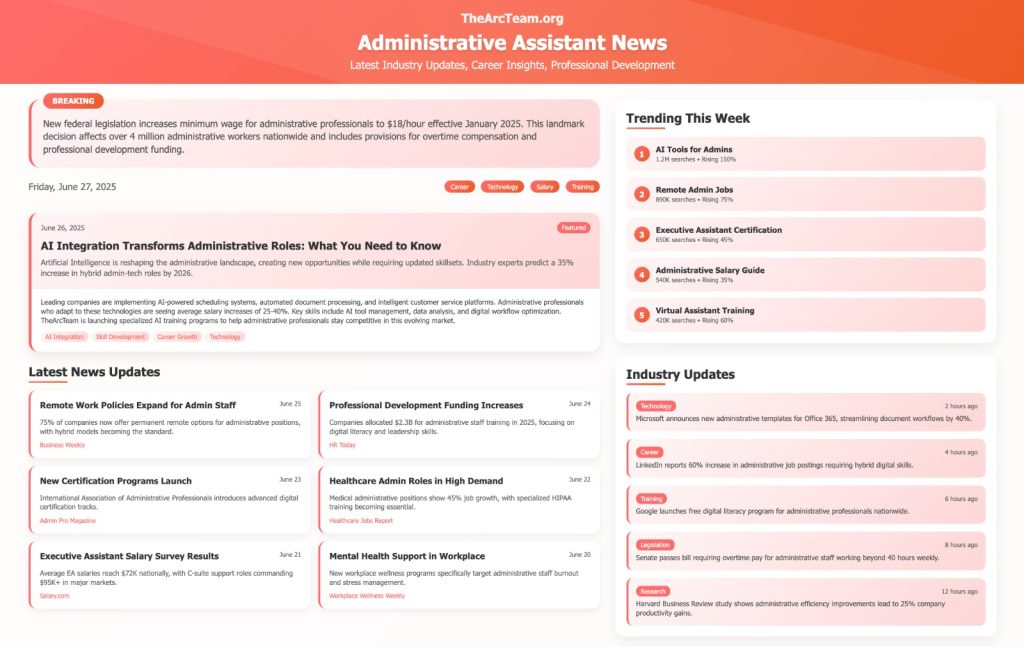
As the role of the administrative assistant continues to evolve, it’s clear that these professionals will remain central to office administration and business operations. The administrative assistant news is focused on a future where administrative assistants are increasingly seen as integral to the strategic management of businesses. The rise of technology will continue to shape how these assistants work, automating routine tasks and enabling them to focus on more complex responsibilities.
Moreover, as the demand for remote work increases, virtual assistants will play an even greater role in healthcare, technology, and professional services, providing administrative support from a distance. With businesses adopting hybrid work models, the flexibility of virtual assistants will be highly valued, making it easier for organizations to scale operations while maintaining efficient, effective administrative functions.
The future of administrative assistants is bright, with exciting opportunities to step into new, dynamic roles within organizations. From working with executives in remote medical settings to managing project teams across industries, administrative assistants will continue to help businesses grow by providing invaluable support and organizing operations with expertise and flexibility.
As the role of the administrative assistant continues to evolve, staying updated with the latest administrative assistant news can help professionals understand how to adapt to these changes. Whether it’s embracing new technology or expanding skills, administrative assistants will continue to be crucial players in driving organizational success.
Ability: The Core Skills of Administrative Assistants
The ability to handle administrative tasks with precision is fundamental for any administrative assistant. From managing schedules to ensuring accurate paperwork, administrative assistants must possess a wide range of skills. This includes the ability to coordinate meetings, prepare reports, manage phone calls, and ensure that requests are handled efficiently. The ability to effectively analyze information, assign tasks, and deliver results is key to maintaining the smooth operation of an office or business.
An administrative assistant should also have the ability to access and manage sensitive information while maintaining confidentiality and professionalism. Whether working with internal teams or clients, the ability to manage relationships, ensure accurate communication, and handle additional verification required can significantly impact the overall success of an organization. Strong organizational and coordination skills are essential in ensuring that daily operations run seamlessly.
Administration: Managing Key Functions for Operational Efficiency
Administration plays a crucial role in the daily functioning of any organization. Administrative assistants are responsible for overseeing a wide range of tasks, from scheduling appointments to managing complex office operations. Their duties include writing reports, ensuring verification, and preparing important documents to ensure that operations are conducted in an organized and efficient manner.
An administrative assistant’s role in administration involves handling tasks such as coordinating meetings, assisting with program requests, and performing various administrative functions to support senior staff. This includes overseeing access to important documents, managing the relationship between various departments, and ensuring that all paperwork is accurate and up-to-date. The role also requires an individual to effectively assign duties, analyze operations, and ensure that all details are checked for accuracy.
Knowledge: Leveraging Expertise for Effective Administrative Support
Knowledge in the field of administration is critical for ensuring the smooth operation of any organization. An administrative assistant should have a strong foundation in the various tasks and responsibilities required for effective administration. This includes the knowledge of office software, such as programs for scheduling appointments, managing records, and handling communication through phone calls and email.
Administrative assistants must prepare themselves for a variety of tasks and challenges that come with managing operations. Whether it’s performing daily duties like data entry or responding to client inquiries, knowledge of the industry and the ability to adapt to new tools or processes is vital. Knowledge also extends to legal and procedural requirements, including additional verification required to ensure that all documentation is compliant with organizational standards. By having a deep understanding of both the primary responsibilities of the role and additional tasks, an administrative assistant can provide exceptional support across all areas of administration.
FAQs about Administrative Assistant News: Best Career Opportunities
What Is the Highest Pay for an Administrative Assistant?
The highest pay for an administrative assistant typically depends on factors such as industry, location, education, and experience. For example, in management positions within large offices or corporate settings, administrative assistants who handle complex scheduling appointments, coordinate meetings, and assist with high-level administrative tasks often receive higher salaries. Additionally, those who support executives or handle virtual administrative tasks can command salaries at the higher end of the spectrum. On average, administrative assistants in large companies can earn monthly salaries ranging from $50,000 to $80,000, with high-paying industries such as finance, healthcare, and technology offering competitive compensation.
A virtual administrative assistant or administrator working remotely may have a slightly different pay scale, depending on the tasks they are responsible for, such as data entry, scheduling appointments, or maintaining records. While the salary for administrative assistants can vary depending on the facility, industry, and the requirement of specific duties, organization skills and detail-oriented abilities are typically highly valued.
Why Are Administrative Assistant Jobs Declining?
There are several reasons why administrative assistant jobs are declining in certain industries. The rise of technology and automation tools, including software that helps with data entry, scheduling, and communication, has streamlined many administrative tasks, reducing the demand for traditional clerical work. Many companies now rely on virtual solutions, where virtual administrative assistants handle administrative functions remotely. The shift toward cloud-based applications and software that can perform tasks more efficiently than manual entry is contributing to this decline.
Furthermore, many businesses have opted to consolidate administrative tasks, reducing the need for multiple administrative professionals in office settings. In complex organizations, a single administrator may be responsible for multiple roles that were traditionally divided among several staff members. As businesses increasingly outsource administrative functions, the number of traditional admin assistant jobs in certain sectors may decrease.
What Is the Future for Administrative Assistants?
The future of administrative assistants is closely linked to the increasing reliance on technology to handle administrative tasks more efficiently. As organizations continue to integrate advanced tools, administrative assistants will need to expand their skills in areas like software management, virtual communication, and data analysis. The demand for administrative assistants will likely grow in roles that require multitasking, communication, and the ability to coordinate complex operations. As a result, administrative assistants who can adapt to new tools and software to manage administrative duties will remain in high demand.
Moreover, administrative assistants in roles such as executive assistant or project coordinator will continue to be valued for their organizational skills, ability to prioritize tasks, and their proficiency in handling both routine tasks and specialized responsibilities. Admin assistants will continue to serve as critical members of an organization, particularly those who can provide virtual assistant services and perform tasks that are not easily automated.
Who Is an Admin Assistant’s Salary?
An admin assistant’s salary varies widely depending on several factors such as industry, experience, location, and the scope of responsibilities. Entry-level administrative assistants can earn monthly salaries starting from around $30,000 to $40,000, while those in more advanced roles such as senior administrative assistants or executive assistants can earn higher salaries, ranging from $50,000 to $70,000 annually. For administrative assistants who take on more specialized tasks, such as managing schedules, coordinating events, or assisting with medical billing or project management, salaries may be higher.
In larger offices or more complex organizations, admin assistants who are responsible for data analysis, maintaining records, or handling confidential information may also see salary increases. Administrative assistants in industries like technology, law, or finance often earn higher salaries due to the complexity and specialization of the tasks they perform. The ability to manage multiple responsibilities efficiently, combined with communication and organizational skills, can lead to an attractive compensation package.

